Reimagining Shared Infrastructure

Running a nonprofit feels heavier than ever. Between endless compliance tasks, high operational costs, and constant administrative burnout, the old reflex to start an independent 501(c)(3) for every community idea is pushing good leaders to their limits.
We’ve all seen the fallout when regional organizations stumble or shutter, like the collapse of legacy institutions reported by The Philadelphia Inquirer. Moments like that reveal just how fragile our sector is. But there’s an overlooked path forward: fiscal sponsorship.
Shared infrastructure can alleviate many of the burdens of traditional 501(c)(3) structures. But as it stands, fiscal sponsorship is still widely misunderstood and chronically underfunded. Too many people view it as either a risky workaround or a set of temporary training wheels designed to sustain initiatives just long enough for them to incorporate on their own.
To challenge these misconceptions, The Philanthropy Network partnered with CultureWorks to host a virtual brown-bag lunch series. We wanted to build trust, take an honest look at power dynamics between funders and grassroots groups, and show how shared back-office infrastructure can help organizations survive and thrive.
The Voices in the Room
Designed as monthly lunchtime discussions, the series brought together foundation officers, community organizers, and fiscal sponsors who rarely get to connect outside of formal grant proposals.
We welcomed perspectives from across the region’s funding landscape and civic partners, including The Philanthropy Network, The Seybert Foundation, Philadelphia Cultural Fund, Bartol Foundation, NBME, and the Repositioning Fund, along with peers from the William Penn Foundation, Barra Foundation, Philadelphia Foundation, Bread & Roses Community Fund, and more.
Fiscal sponsors and community leaders brought lived experiences to every session. We heard insights and grounded perspectives from organizations like CultureWorks Greater Philadelphia, Urban Affairs Coalition, Social Impact Commons, Black Nonprofit Chief Executives of Philadelphia, Movement Alliance Project, and the Philadelphia Folklore Project, among others.
How the Conversations Unfolded
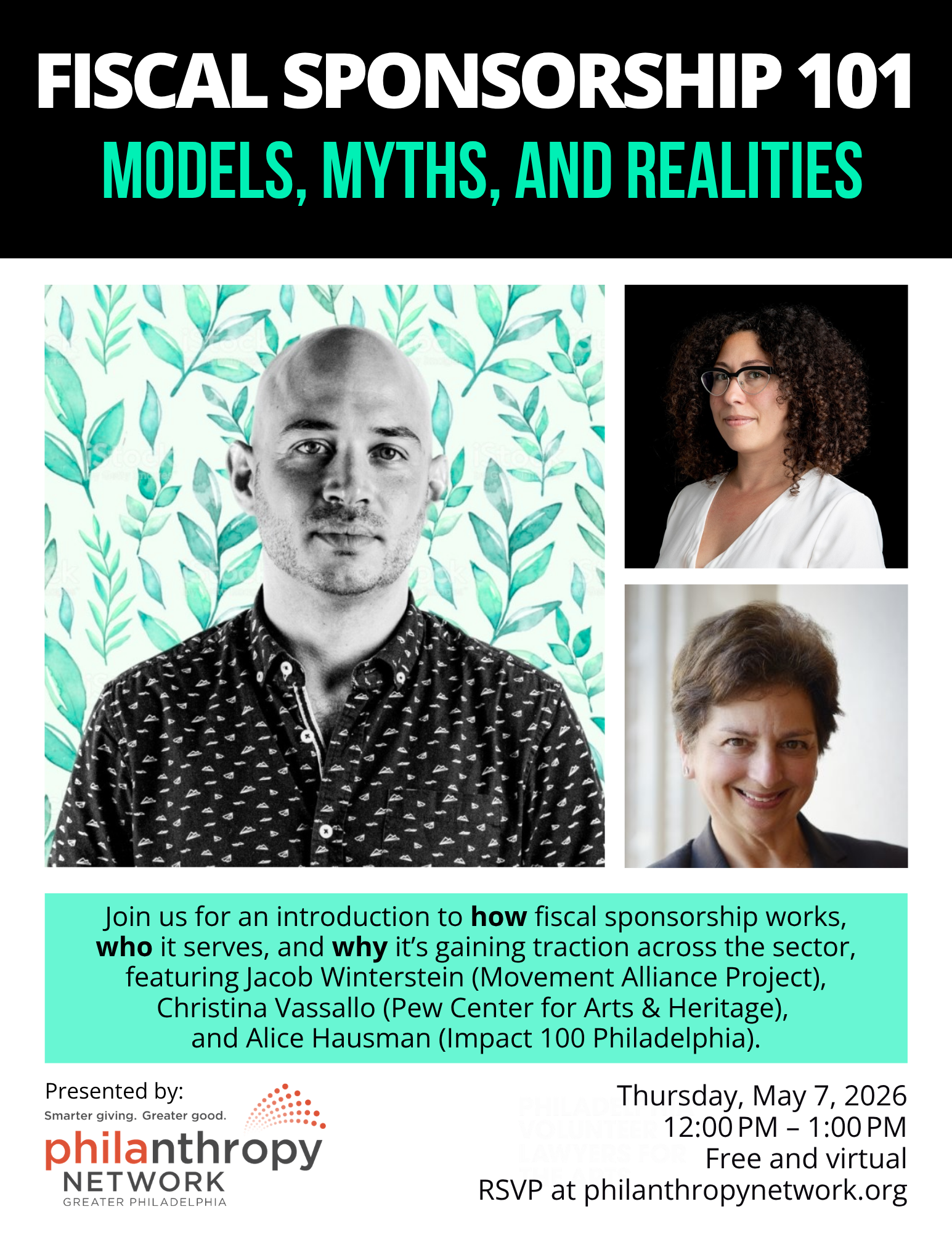
The series kicked off on May 7 with Fiscal Sponsorship 101: Models, Myths, and Realities. We dug into the core operating models, sorting fact from fiction. The biggest takeaway was that fiscal sponsorship is an intentional, permanent home for many projects, not just a short term incubator designed to be outgrown. We walked through how groups utilize these structures. We also heard from grantmakers who’ve updated their guidelines so they could fund sponsored projects directly.
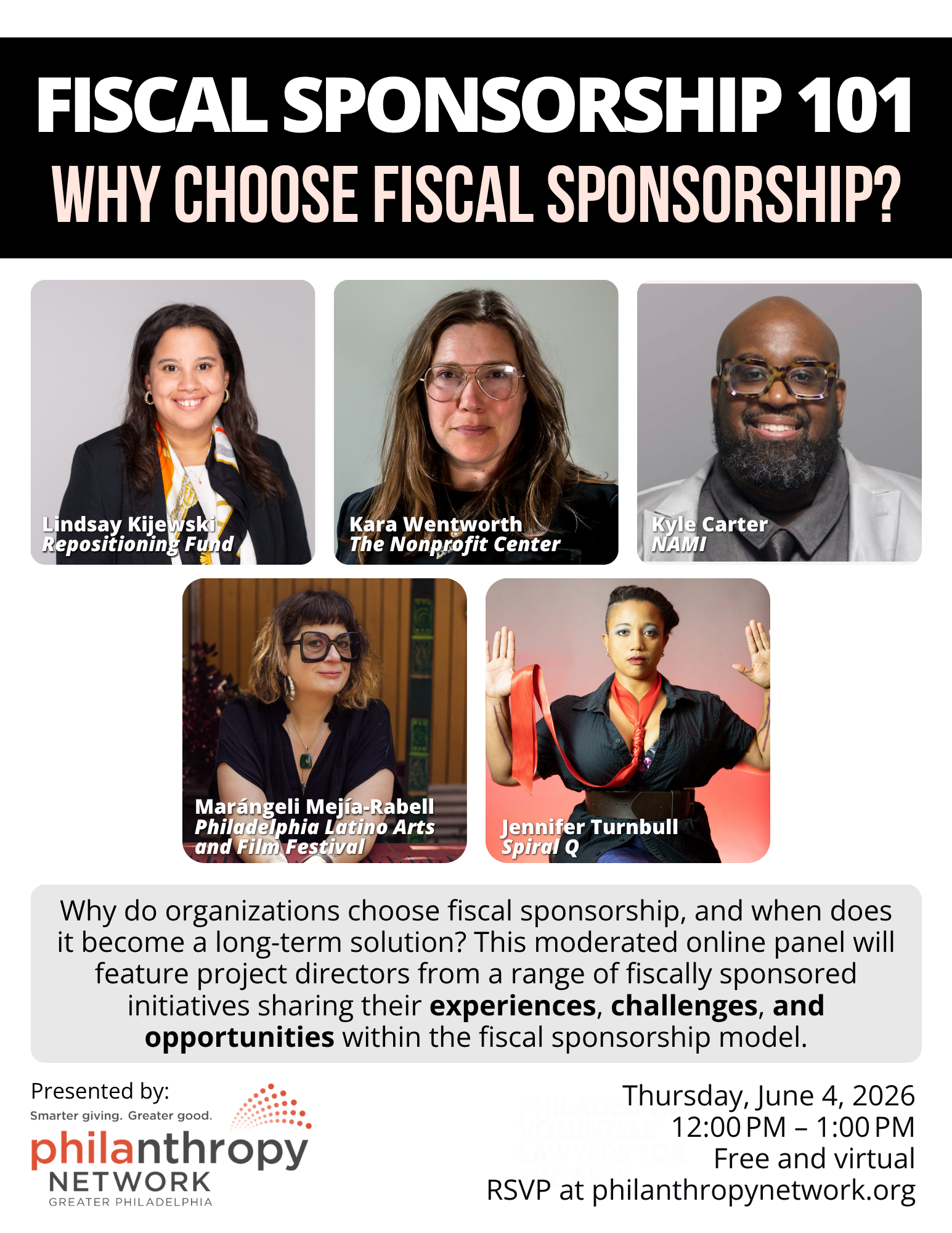
On June 4, we gathered for Why Move Into Fiscal Sponsorship? We handed off the microphone to fiscally sponsored project directors, who shared what it feels like to step away from standalone nonprofit structures. Handing over payroll, audits, and insurance ultimately didn’t mean losing control. Rather, it gave directors the headspace to deepen their community programs and spend more time on their core mission, all while avoiding burnout.
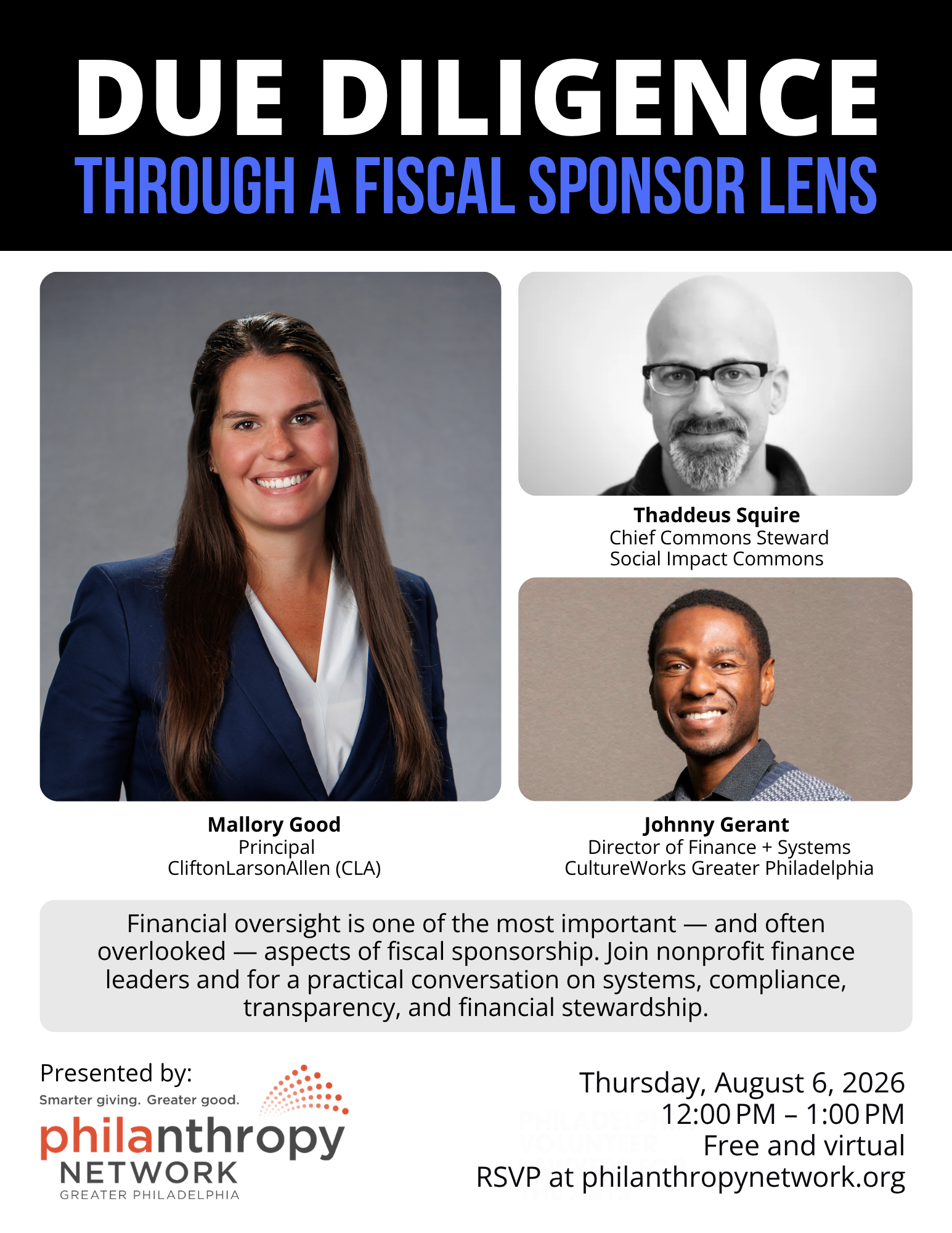
On August 6, we returned for Due Diligence Through a Fiscal Sponsor Lens. Ariel Shelton from CultureWorks moderated a practical panel featuring Johnny Gerant from CultureWorks, Thaddeus Squire from Social Impact Commons, and Mallory Good from CLA. They walked through fund accounting systems like Sage, explaining how restricted dollars are separated and how clean audits happen. Attendees learned that a strong fiscal sponsor actually protects philanthropic investments and takes a massive paperwork burden off tiny teams.
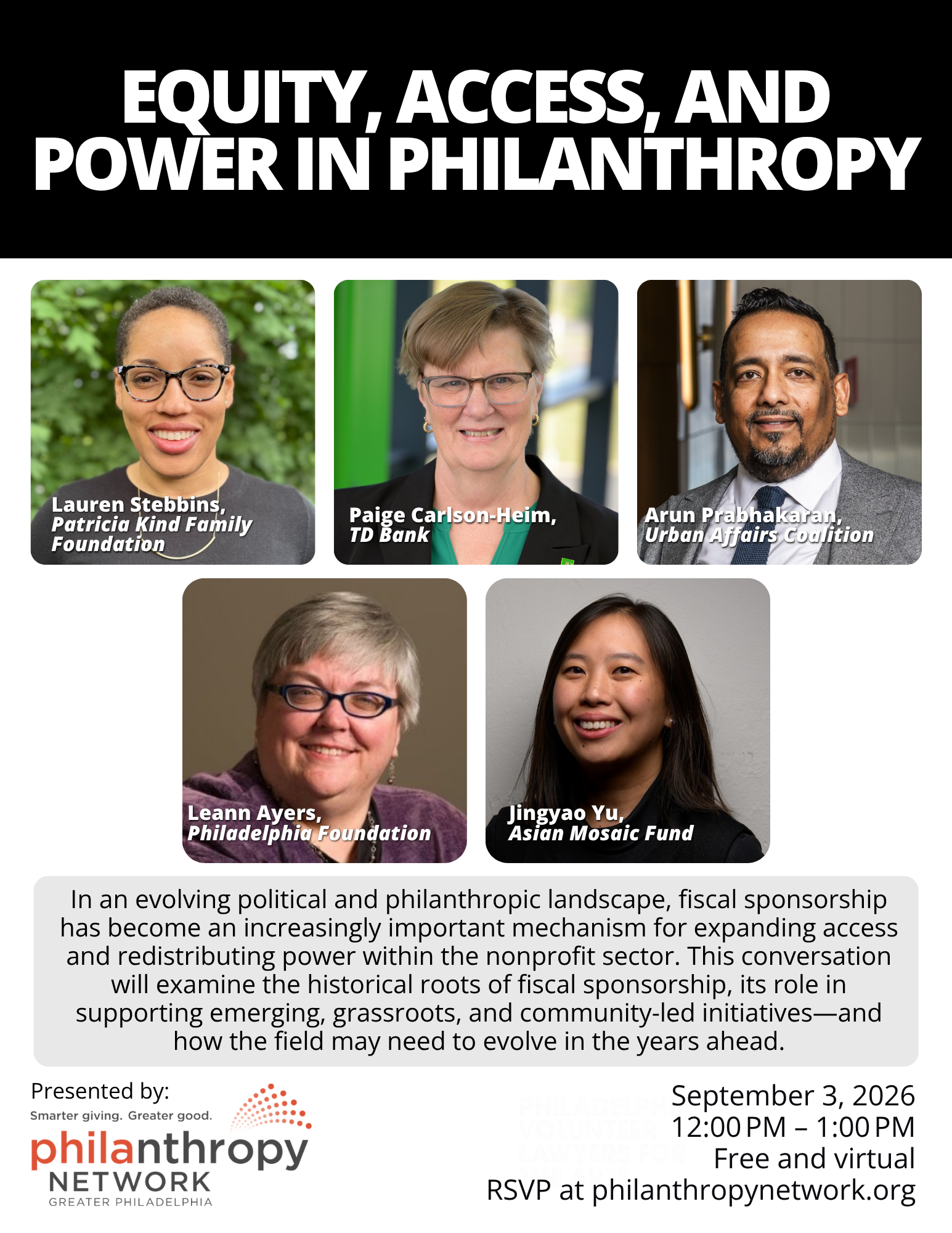
On September 3, we explored Equity, Access, and Power in Philanthropy. Traditional philanthropy often favors organizations that can afford grant writers and attorneys, which can exclude under-resourced organizations, particularly grassroots and POC-led movements. We talked about how fiscal sponsorship acts as a tool for redistributing capital and discussed ways funders can ease reporting requirements as to not recreate the same old barriers.
Takeaways from the series
Sustainability takes teamwork. The idea that every initiative must survive as an island will lead to more burnout and wasted money as a result of needlessly burdensome administrative overhead.
True equity means community leaders can focus on making an impact without getting crushed by administrative red tape. When we invest in the operational backbone, we protect the work itself.
If we want our cultural and social sectors to thrive, we have to turn good intentions into practical commitments.
For funders, that means actively welcoming sponsored projects for multi-year general operating support, and including sponsorship fees in grant awards. It means taking the mystery out of fund accounting and compliance, turning due diligence into a tool for mutual trust rather than a wall designed to keep people out. But most of all, it means seeing fiscal sponsors as vital civic partners who deserve real investment, not just as transactional conduits for passing money.